


Soft living isn’t about luxury purchases, aesthetic trends, or pretending life is perfect. At its core, soft living is about creating a lifestyle that feels supportive, intentional, and aligned with your well-being.
It’s about slowing down enough to appreciate the life you’re building.
Interestingly, many of the principles that define soft living also apply to healthy curly hair care.
Both require patience.
Both require consistency.
Both encourage you to work with yourself rather than against yourself.
And both remind you that beauty often emerges when you stop chasing perfection.
What Soft Living Really Means
Social media often presents soft living as a collection of beautiful images.
Neutral-toned bedrooms.
Expensive candles.
Fresh flowers.
Luxury robes.
While these things can certainly contribute to a peaceful atmosphere, soft living goes much deeper.
Soft living is a mindset.
It means creating routines that support your mental, emotional, and physical well-being.
It means choosing rest when you’re tired.
It means setting boundaries.
It means making space for joy, creativity, and reflection.
Most importantly, it means allowing yourself to move through life with less pressure.
Many women spend years operating in survival mode.
Soft living encourages a different approach.
Instead of constantly asking, “How can I do more?” it asks, “How can I care for myself better?”



Learning to Embrace Your Natural Texture
For decades, many women with curly hair were taught that straight hair was the standard.
Hair advertisements, magazines, movies, and workplace expectations often reinforced the idea that sleek, straight hair was more professional, more beautiful, or more desirable.
As a result, many curly-haired women spent years trying to change their natural texture.
Hours were spent straightening, relaxing, and fighting against curls.
For some women, embracing their natural curls becomes a deeply personal journey.
It requires unlearning old messages and redefining beauty on their own terms.
This journey mirrors soft living in many ways.
Soft living asks you to stop forcing yourself into molds that don’t fit.
Natural hair acceptance asks the same thing.
When you begin embracing your curls, you’re often embracing yourself as well.
One of the most important parts of protecting your curls is choosing the right nighttime essentials.
We explore this in more detail in
Silk Pillowcases, Satin Bonnets & 10 Other Soft Living Essentials Every Curly Girl Should Own.
Curly Hair Teaches Patience
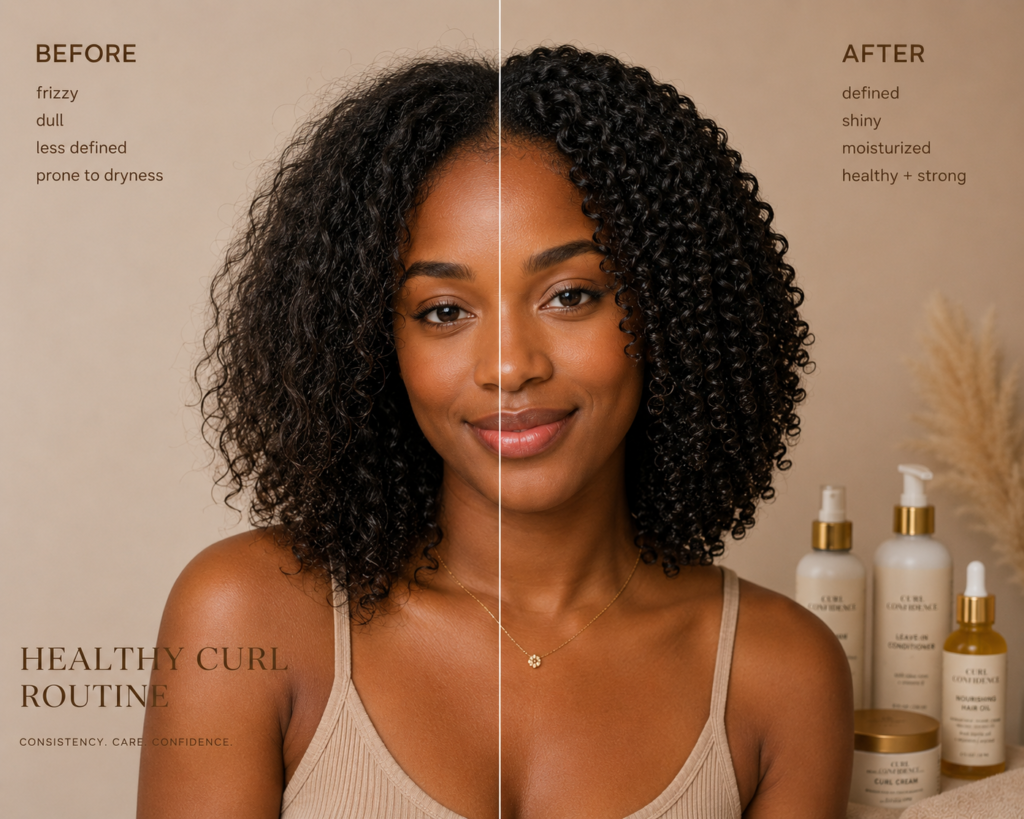
One of the most valuable lessons curly hair teaches is patience.
Healthy curls rarely happen overnight.
Hair growth takes time.
Damage repair takes time.
Learning your curl pattern takes time.
Finding the right routine takes time.
In today’s world, patience can feel uncomfortable.
We’re surrounded by promises of instant results.
Quick fixes.
Overnight transformations.
Curly hair reminds us that meaningful change often happens slowly.
The same is true for soft living.
Creating a calmer life isn’t something that happens in a weekend.
It’s built through small habits repeated consistently over time.
Morning routines.
Boundaries.
Rest.
Journaling.
Gentle movement.
The beauty is in the repetition.
The Connection Between Wellness and Hair Health
Hair health doesn’t exist in isolation.
Our bodies, minds, and lifestyles influence the condition of our hair.
While no routine can guarantee perfect hair, certain wellness habits often support overall hair health.
These include:
- Staying hydrated
- Managing stress
- Getting adequate sleep
- Eating nourishing foods
- Practicing consistent self-care
Many women notice that periods of high stress affect their hair.
They may experience increased shedding, scalp irritation, or changes in hair texture.
This doesn’t mean stress is entirely responsible for hair health, but it highlights the connection between wellness and beauty.
Soft living encourages us to care for the whole person, not just the appearance.
Why Slow Beauty Matters
Modern beauty culture often encourages consumption.
Buy more products.
Try the newest trend.
Follow the latest routine.
While products can be helpful, they are not the foundation of healthy hair.
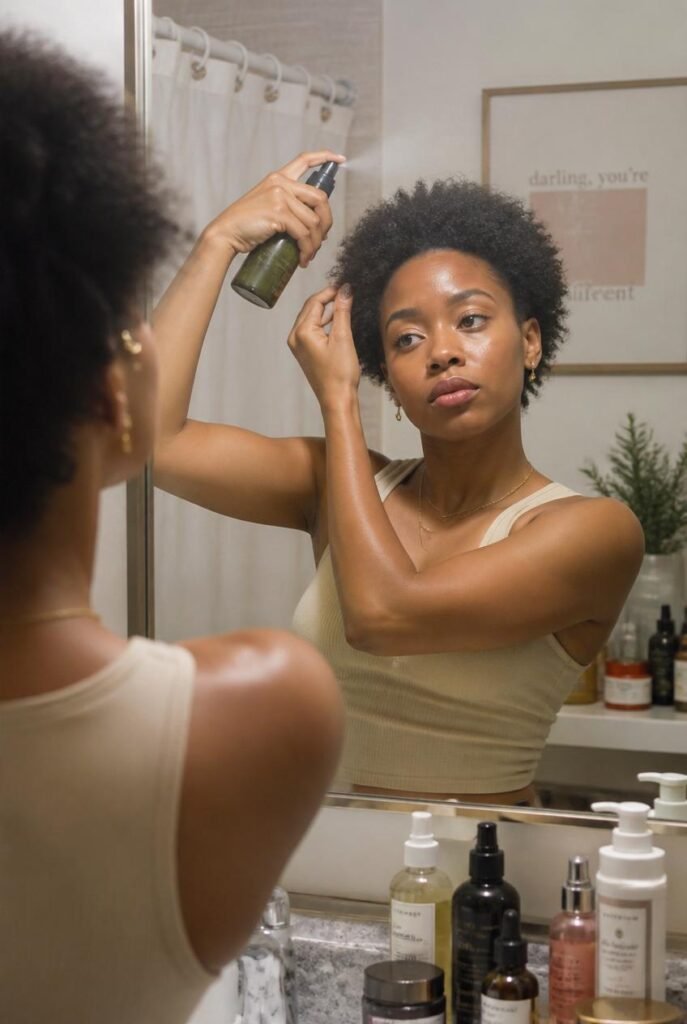
Slow beauty offers an alternative approach.
Instead of chasing every trend, slow beauty focuses on intentional care.
It asks questions like:
- What does my hair actually need?
- Which products genuinely work for me?
- How can I simplify my routine?
This approach often saves time, money, and energy.
More importantly, it helps create a healthier relationship with beauty.
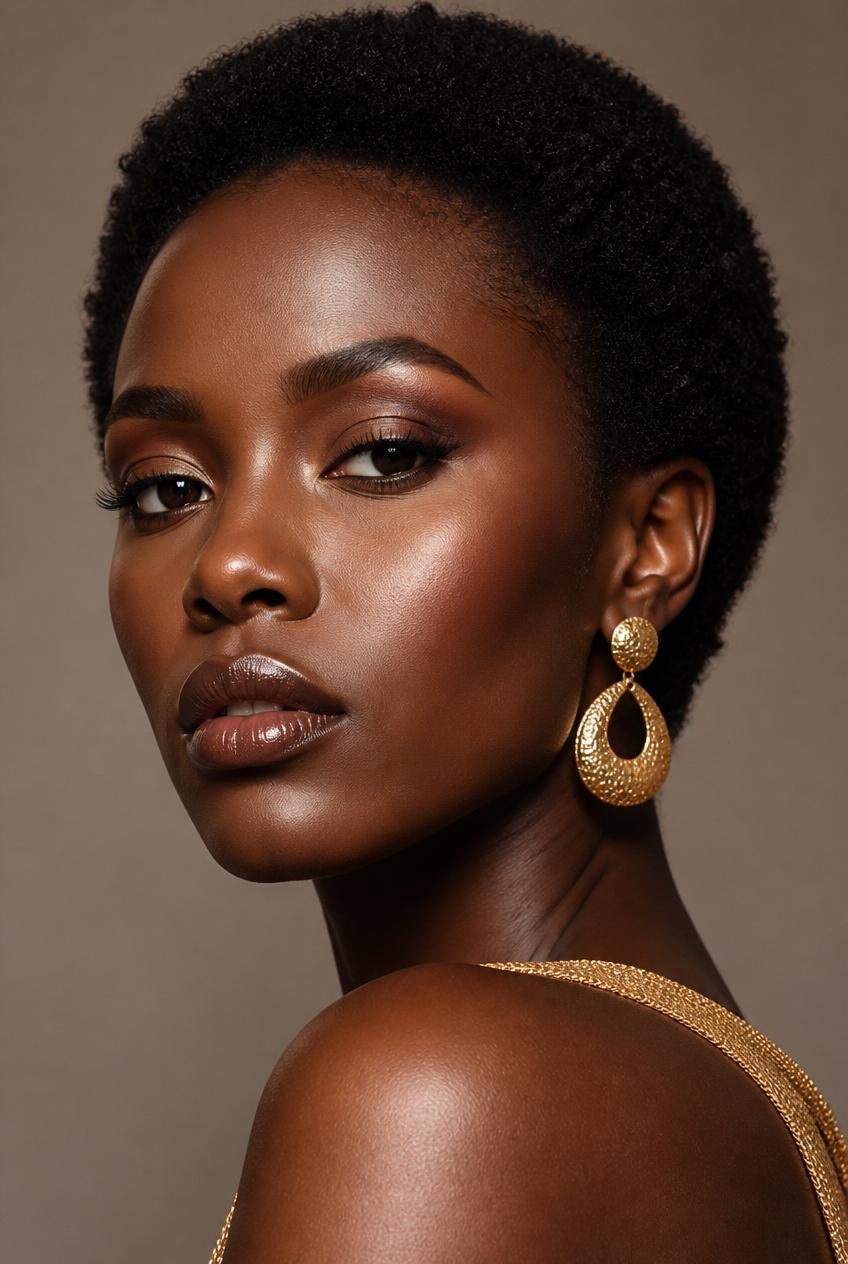
Creating Rituals Instead of Chores
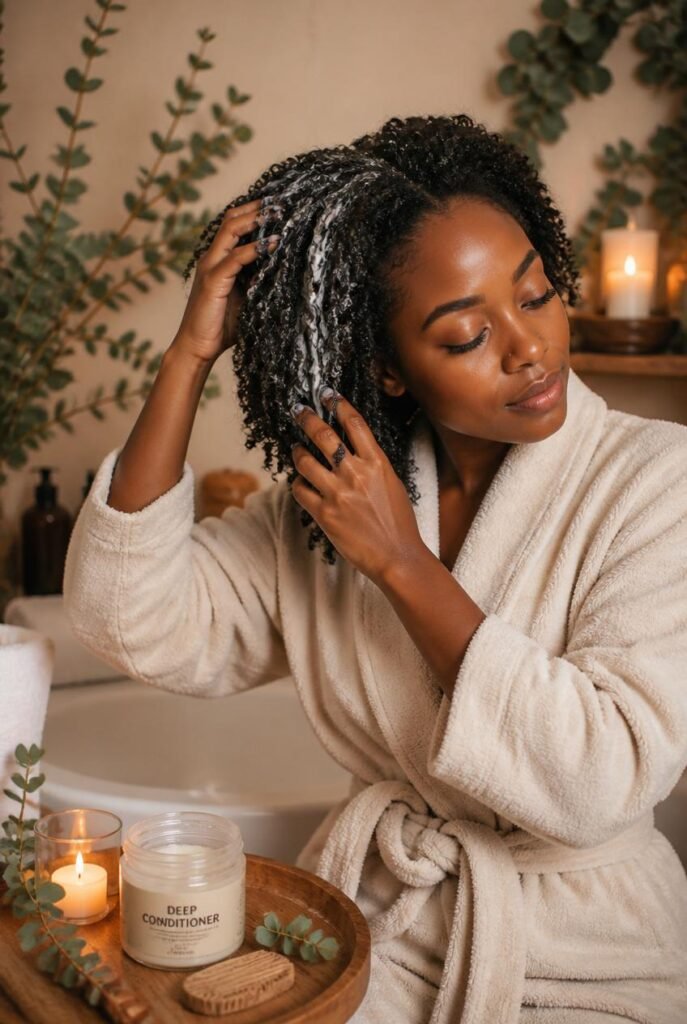
One of the easiest ways to bring soft living into your curly hair routine is by turning ordinary tasks into rituals.
Wash day doesn’t have to feel overwhelming.
It can become something you look forward to.
Light a candle.
Play your favorite playlist.
Prepare a cup of tea.
Take your time.
The goal isn’t simply clean hair.
The goal is creating a moment of care.
Small rituals remind us that self-care doesn’t always require grand gestures.
Sometimes it looks like spending thirty minutes caring for yourself without rushing.



This post may contain affiliate links, which means I may earn a small commission at no extra cost to you.
Creating Rituals Instead of Chores
One of the easiest ways to bring soft living into your curly hair routine is by turning ordinary tasks into rituals.
Wash day doesn’t have to feel overwhelming.
It can become something you look forward to.
Light a candle.
Play your favorite playlist.
Prepare a cup of tea.
Take your time.
The goal isn’t simply clean hair.
The goal is creating a moment of care.
Small rituals remind us that self-care doesn’t always require grand gestures.
Sometimes it looks like spending thirty minutes caring for yourself without rushing.
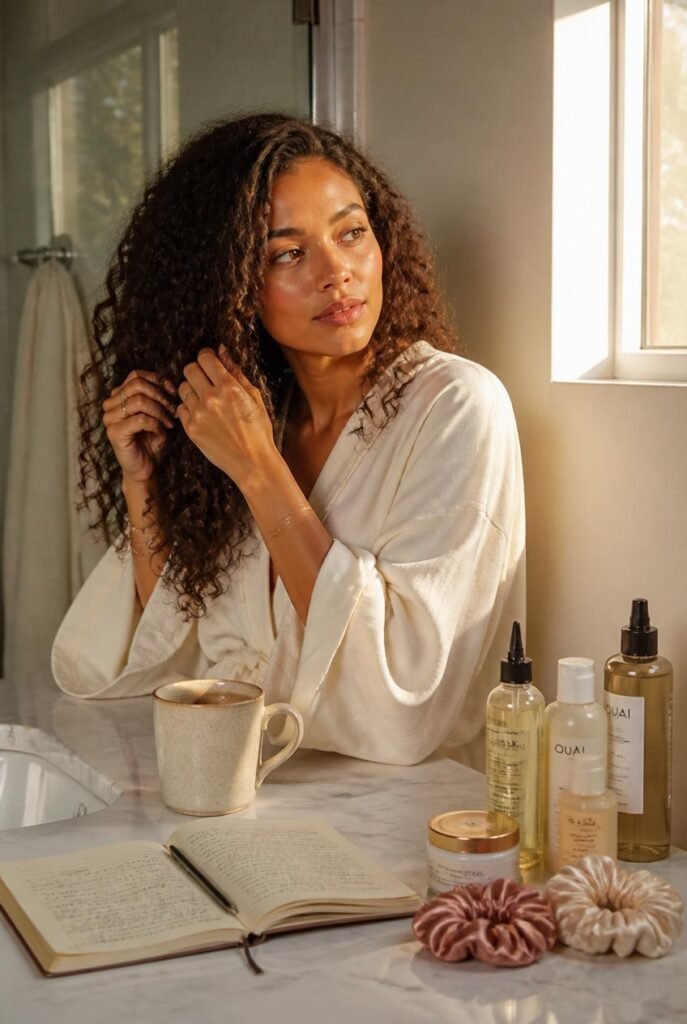
Morning Habits That Support Healthy Curls
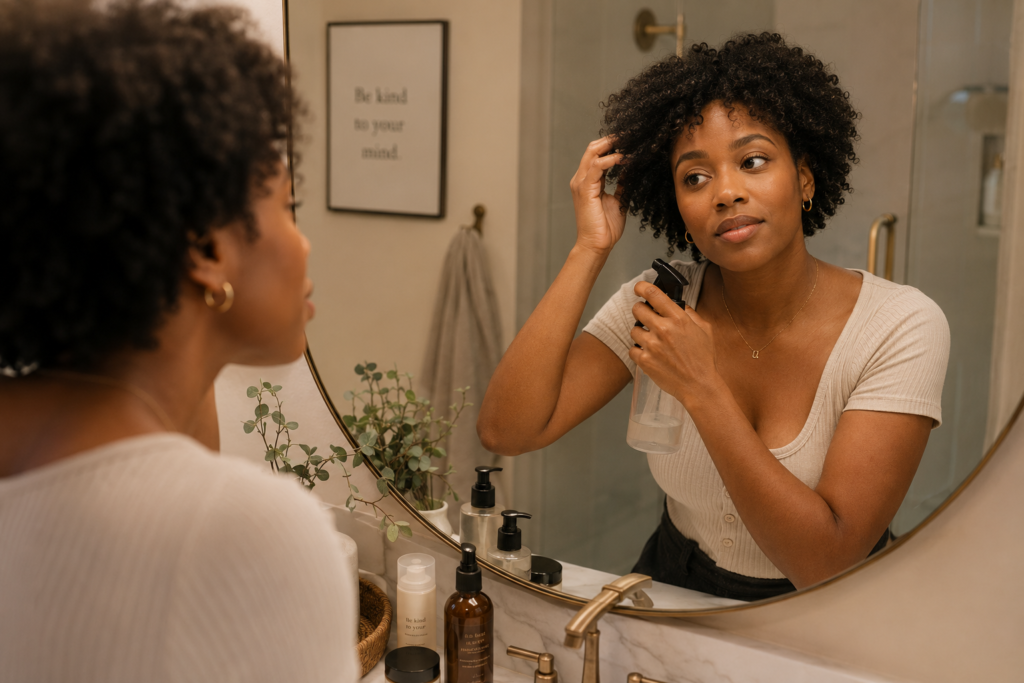
How you begin your day matters.
Simple morning habits can help support both your curls and your mindset.
Consider:
- Refreshing curls gently rather than over-manipulating them
- Drinking water before coffee
- Practicing gratitude
- Opening windows for fresh air
- Spending a few moments in quiet before checking your phone
These habits may seem small, but they help create a more intentional start to the day.
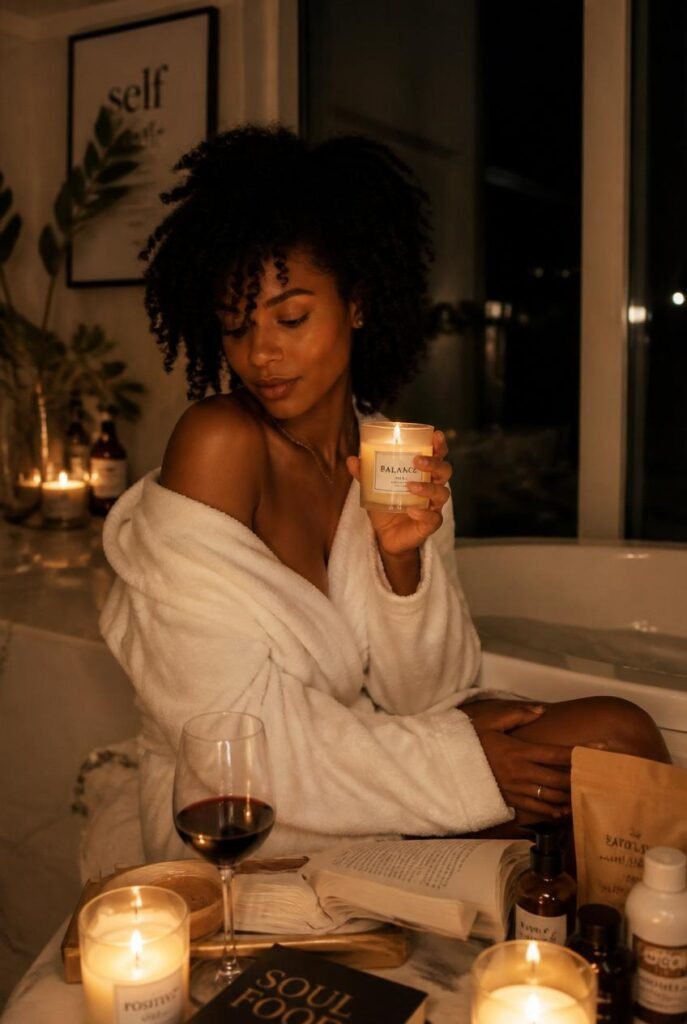
Evening Habits That Support Healthy Curls
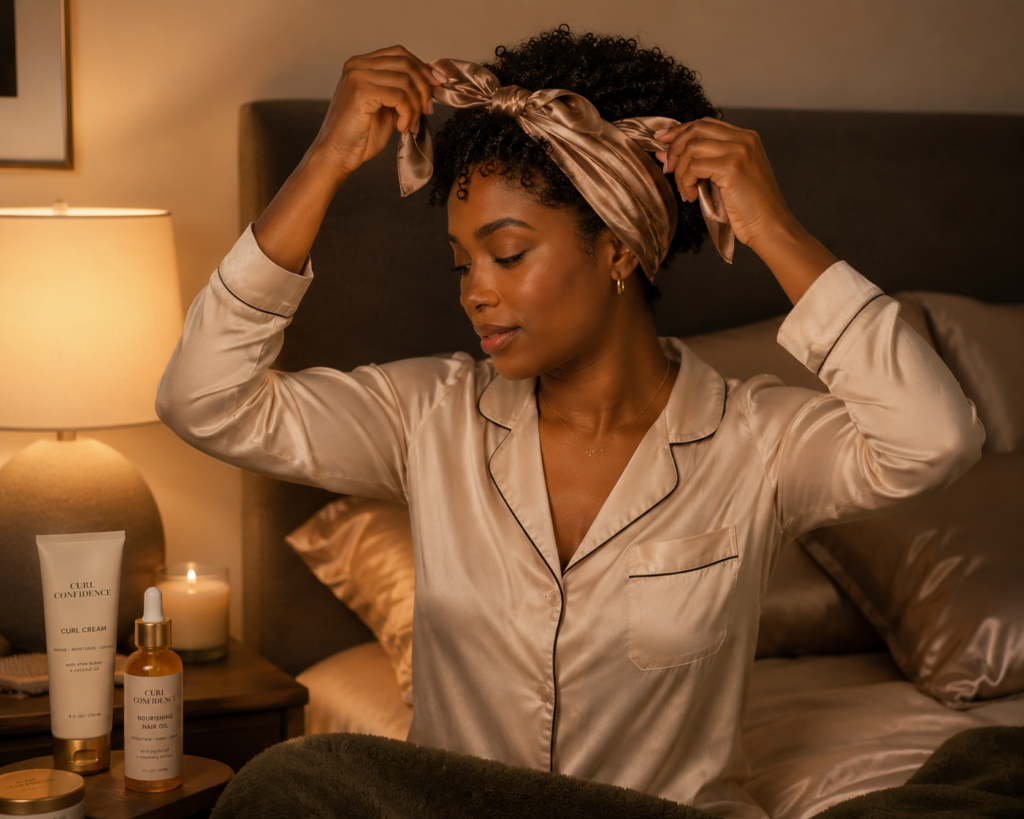
Evening routines are equally important.
Protecting your curls overnight can reduce tangling, breakage, and frizz.
Helpful habits include:
- Sleeping with a satin bonnet
- Using a silk pillowcase
- Applying a light moisturizer if needed
- Creating a calm bedtime routine
- Reducing screen time before bed
The goal is not perfection.
It’s consistency.

Curly Hair and Self-Confidence

Confidence doesn’t come from having perfect hair.
It comes from accepting yourself.
There will always be days when your curls don’t cooperate.
There will always be moments when comparison tries to steal your joy.
But confidence grows when you stop measuring yourself against unrealistic standards.
Your curls do not need to look like someone else’s.
Your journey does not need to look like someone else’s.
Soft living teaches us to appreciate what is already present rather than constantly chasing something different.
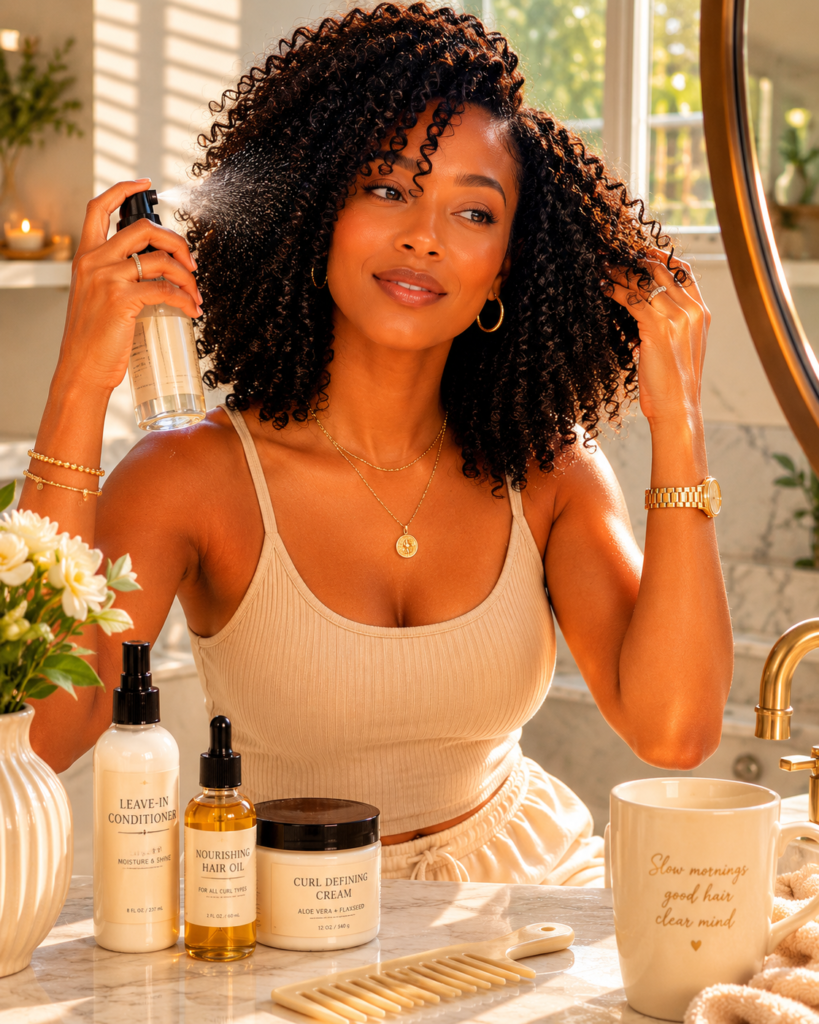
Building a Soft Life Beauty Routine
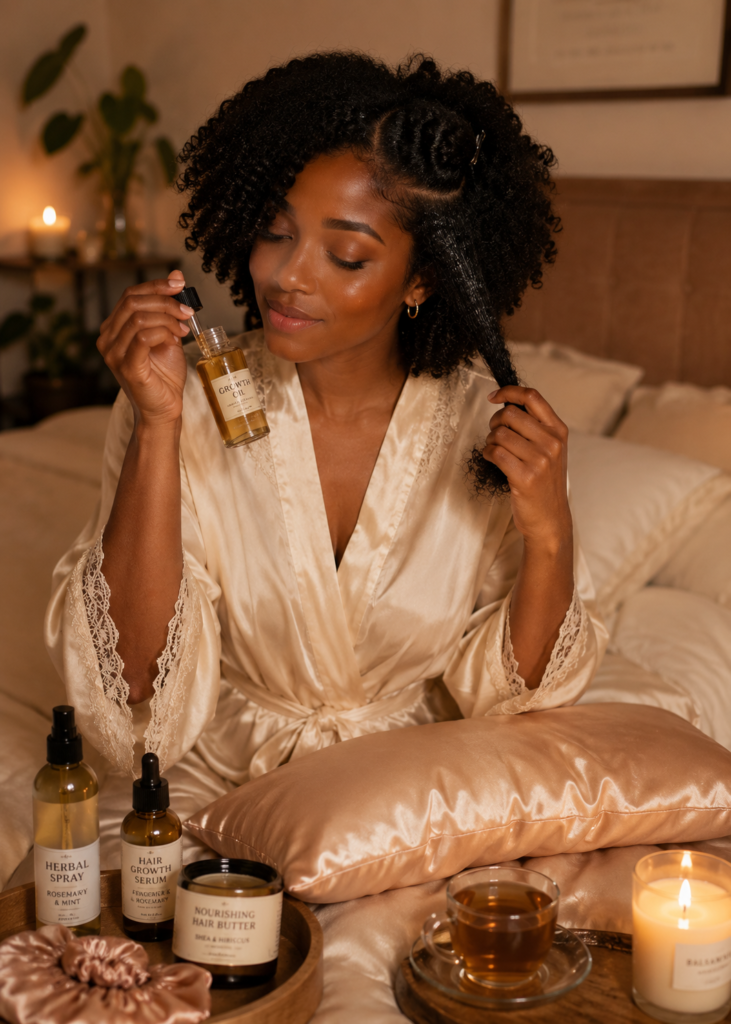
A soft life beauty routine isn’t about doing more.
It’s about doing what serves you.
Consider creating routines that feel calming rather than stressful.
Choose products you genuinely enjoy using.
Create space for rest.
Allow beauty routines to support your well-being instead of becoming another source of pressure.
When beauty becomes an act of care rather than criticism, everything changes.
Frequently Asked Questions
What does soft living mean?
Soft living is a lifestyle centered around intentionality, balance, self-care, and creating routines that support your overall well-being.
Can curly hair be part of a soft life lifestyle?
Absolutely. Curly hair care often involves rituals, patience, consistency, and self-acceptance, all of which align with soft living principles.
Do I need expensive products for healthy curls?
No. Consistent habits and understanding your hair’s needs are often more important than purchasing expensive products.
Why is self-acceptance important in hair care?
When you accept your natural texture, you’re more likely to build routines that support your hair rather than constantly trying to change it.
Final Thoughts
Curly hair and soft living share a common lesson.
Neither asks you to become someone else.
Both invite you to care for what already exists.
Healthy curls are built through patience.
A softer life is built through patience.
Neither requires perfection.
Both require presence.
When you learn to slow down, care for yourself consistently, and embrace your natural beauty, you begin creating something far more valuable than a hairstyle.
You begin creating a life that feels good to live.
With softness,
Kentstunnin
One Comment